content loaded
ADISE
Hem
Hem
ADI a Resideo company
menu

Holistic solutions: Navigating between access control, fire safety and security challenges in data centers

In the digital age, data centers are the backbone of modern businesses, where they store and process large amounts of sensitive information. As the importance of these facilities grows, so does the need for robust access, fire safety, and security measures to ensure the confidentiality, integrity, and availability of critical data. This article explores the challenges faced by data centers and dives deep into the application of advanced technologies in passes, fire safety, and security to protect against potential threats.

Understanding the unique challenges of data centers

Data centers hold an invaluable amount of information, making them attractive targets for both physical and digital threats. The dual challenge lies in protecting against unauthorized physical access and environmental threats such as fires. Unauthorised passage can lead to data breaches, while environmental threats pose risks to the infrastructure and integrity of the stored data.
Access control solutions for data centers

Access control is the first line of defense for securing data centers. Advanced access control systems go beyond traditional methods and include biometric authentication, smart card systems, and multi-factor authentication. Biometric measures, such as fingerprint or retina scanning, are often used in conjunction with traditional passes, such as proximity readers. Since cards can be stolen, this is used as a two-step security measure to ensure that the biometric validation belongs to the correct passer card.

Fire safety measures in data centres

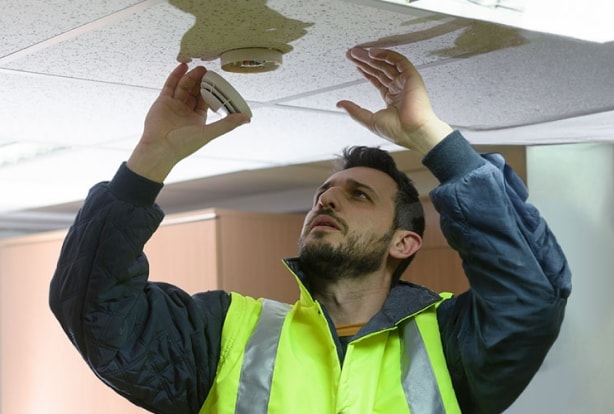
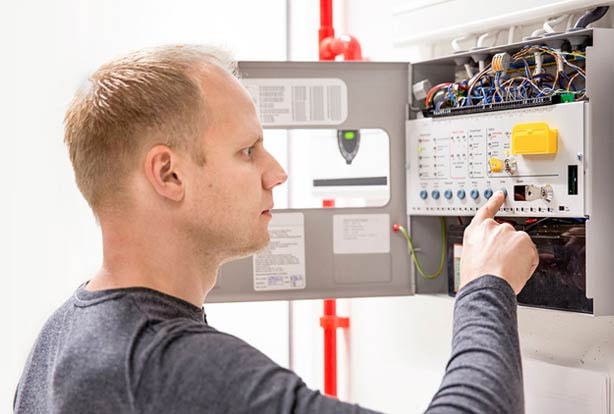
In data centres, the ever-present risk of fire is a consequence of the extensive use of electronic equipment, which generates significant heat. A fire in a server room can occur from various sources, such as a faulty hard drive, an electrical short circuit, or faulty ceiling lighting. In the underlying floors, electrical faults from a cable or wire can cause a fire that spreads to the server room above. To counteract this risk, advanced fire protection systems are an integrated preventive measure in data centers. These systems include various detectors, including smoke detectors, heat detectors, and aspirating detectors. Unlike traditional sensors, aspirating detectors actively draw in air samples and analyze them for smoke particles, providing an early indication of potential fire threats. In collaboration with fire alarm panels and fire alarm devices, these fire protection tools quickly alert building occupants to evacuate and activate fire extinguishing systems. This innovative approach significantly increases the effectiveness of fire protection strategies in data centers and allows for quick and targeted responses to prevent potential disasters before they escalate.

Security Protocols and Monitoring

Integrating video surveillance systems with access control provides a robust security solution for different environments and addresses multifaceted challenges. The system enables effective real-time detection and response by combining video surveillance and intelligent analytics (AI) software, helping to prevent data loss or breach. This proactive approach improves overall security by quickly identifying suspicious activities, anomalies, and potential breaches before they manifest.

In addition, the integration helps to avoid malicious and incorrect operations and facilitates continuous monitoring of ongoing issues and events. The use of infrared cameras significantly improves surveillance capabilities, as they can discreetly capture high-resolution images of events. These cameras are very effective at detection and difficult to bypass. In particular, their night vision feature enables round-the-clock security monitoring of data centers, both indoors and outdoors, ensuring comprehensive protection. Thermal security cameras can also identify overheated devices within the data center, potentially further reinforcing security measures.

Future trends and innovations

As technology advances, data centers need to stay ahead of new threats. Future trends in access control, fire safety, and security include the integration of artificial intelligence (AI) and machine learning (ML) for predictive analytics and automation. These technologies have the potential to revolutionize threat detection and response, giving data centers an even more proactive defense against evolving risks. Expected advancements in AI-powered security protocols and monitoring systems offer a preview of the future of data center protection. For example, predictive analytics can identify patterns that indicate potential security breaches, allowing for preventative measures. Innovations in fire safety, such as smart fire extinguishing systems, demonstrate the ongoing commitment to ensuring the highest level of protection for data center infrastructure.

Conclusion

In conclusion, data center protection requires a comprehensive and holistic approach that collectively addresses access control systems, fire safety, and security. The challenges faced by these facilities require advanced technology and proactive measures to protect against potential threats. Access control systems, fire safety measures, and surveillance protocols need to harmonize to create a robust defense strategy.

Related resources

close button